We are in the midst of 'buttercup month' at the moment.


On the drier grasslands (e.g Hutchison's meadow and many churchyards and road verges), bulbous buttercup -
Ranunculus bulbosus has been in bloom for a week or two, adding some welcome yellow 'sunlight' to the rather rain swept days of April and early May. A frequent companion of one of the earliest flowering meadow grasses - sweet vernal grass -
Anthoxanthum odoratum, bulbous buttercup is easily distinguished from other buttercups, by it softly lobed leaves and its down-turned or reflexed sepals.


Often at least a fortnight of so later, meadow buttercup -
Ranunculus acris begins to flower - carrying its much taller flowering heads up into the hay. It also has a much more cut or dissected leaf.
Meadow buttercup is the buttercup that creates the beautiful haze of yellow seen in hay meadows - often flowering at the same time as common sorrel -
Rumex acetosa - the yellow buttercup contrasting dramatically with the red sorrel.
For me, 'buttercup month' also means returning to the office after a meadow visit with my shoes or boots covered with yellow dust from the petals and pollen!


 A native of old grasslands and green lanes of the boulder clay this member of the pea family really shines out in the meadow. It's rich yellow flowers were once used for dyeing fabric - hence its name.In addition to being an uncommon native plant in Suffolk, Dyer's greenweed was once widely cultivated. The account of the species in Martin Sanford's excellent 'A Flora of Suffolk' (2010) includes reference to Dyer's greenweed being cultivated and harvested in fields near Debenham in the 19th Century, with the resulting harvest going off by the cart load to be used for cloth dyeing in Haverhill.


 As we walked around the edge of the meadows, Ellie caught a buttercup in her collar - an excellent photo opportunity and from the slight yellow glow beneath her chin I would say she definitely likes butter!
+-+Copy.JPG)

 On the drier grasslands (e.g Hutchison's meadow and many churchyards and road verges), bulbous buttercup - Ranunculus bulbosus has been in bloom for a week or two, adding some welcome yellow 'sunlight' to the rather rain swept days of April and early May. A frequent companion of one of the earliest flowering meadow grasses - sweet vernal grass - Anthoxanthum odoratum, bulbous buttercup is easily distinguished from other buttercups, by it softly lobed leaves and its down-turned or reflexed sepals.
 Often at least a fortnight of so later, meadow buttercup - Ranunculus acris begins to flower - carrying its much taller flowering heads up into the hay. It also has a much more cut or dissected leaf.
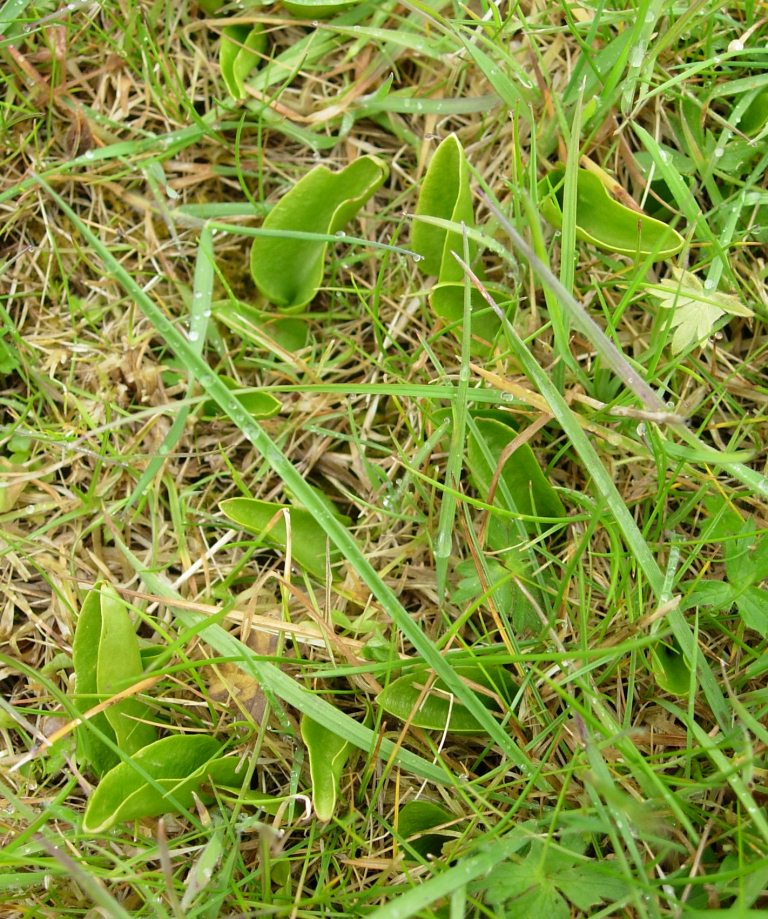 This month, the meadows begin to 'move' as days lengthen, the soil warms up and April showers and downpours provide welcome moisture. However, growth is slow, the 'spring flush' of grass is yet to take off. Early and low flowering species like barren strawberry, bugle and germander speedwell are still clearly visible and cowslips are often the tallest flowers in the meadows.
